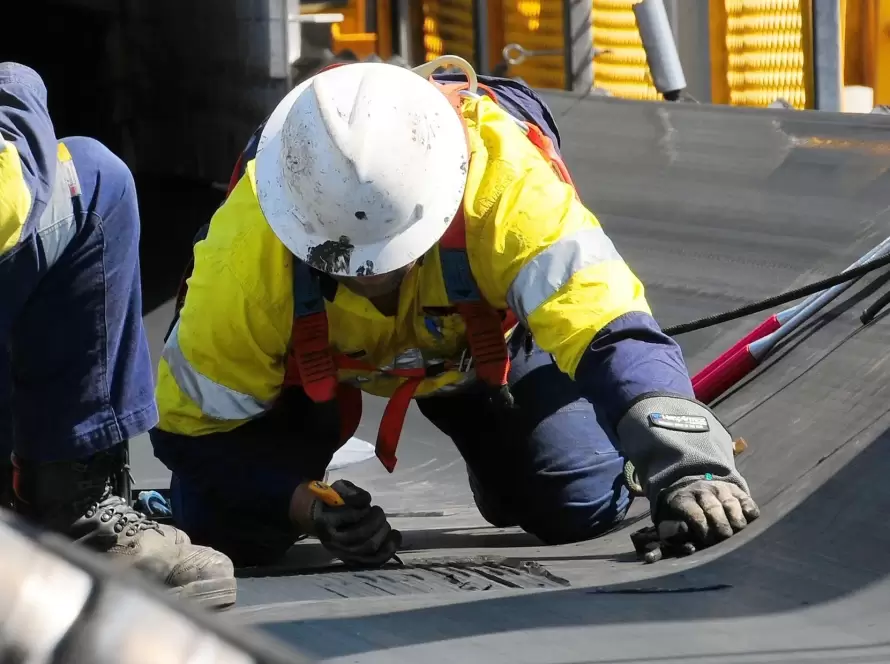
Effective understanding of how supervisory training supports mine site safety and compliance begins with equipping leaders with the skills to identify hazards, manage risks, and ensure adherence to Western Australia’s strict legal standards.
• It provides the essential G1, G8, and G9 competencies required for risk management and incident investigation. • It helps ensure supervisors can fulfill their legal duties under WA’s Work Health and Safety (Mines) Regulations 2022. • It translates legal theory into practical, on-the-ground actions that may prevent incidents and protect workers.
Continue reading for a comprehensive guide on a supervisor’s duties, the specific laws they must follow, and the business case for investing in high-quality training.
According to national data from Safe Work Australia, the mining industry consistently faces high-risk hazards that can lead to serious injury or fatalities. While comprehensive safety management systems are crucial for any operation, their effectiveness relies heavily on the competence of frontline leaders. If you are stepping into a leadership role, you might wonder exactly how supervisory training supports mine site safety and compliance, particularly within the unique legal and operational environment of Western Australia.
This guide explores a supervisor’s core responsibilities, the mandatory G1, G8, and G9 training required in WA, the specific legislation you must adhere to, and the tangible business benefits of advanced leadership development. Moving beyond generic advice, we provide practical, scenario-based insights tailored for supervisors working in WA’s demanding resources sector. Let’s start by looking at the foundational duties that define your role on site.
Table of Contents
- The Supervisor’s Core Safety Responsibilities
- Mandatory Training for WA Mine Supervisors
- Navigating Western Australia’s Mine Safety Legislation
- From Theory to Practice on a WA Mine Site
- The Business Case for Advanced Supervisory Training
- Frequently Asked Questions
- Limitations, Alternatives & Professional Guidance
- Conclusion
- References
The Supervisor’s Core Safety Responsibilities
A mine supervisor’s primary responsibility is to help ensure, as far as is reasonably practicable, the health and safety of the workers under their direction by proactively managing the work environment. The role of a supervisor in workplace safety rests on three key pillars: rigorous risk management, clear communication, and visible leadership.
When examining the duties of a mine supervisor, hazard identification and risk control take centre stage. Effective hazard identification in mining involves constantly scanning the environment to spot potential dangers before they escalate. Supervisors typically use tools like formal risk assessments and Job Safety Analyses (JSAs) to evaluate these risks and implement appropriate control measures. The responsibilities of a mine supervisor’s safety framework suggest that you are not just identifying problems, but actively applying solutions that protect your crew.
Another critical component is ensuring that all work is conducted in accordance with established safe work procedures. This requires continuous, clear communication. Pre-start meetings and toolbox talks are essential forums for this exchange. Selecting relevant toolbox talk topics for mining, such as managing heat stress or interacting with heavy machinery, helps keep specific, timely risks top of mind for your team.
Furthermore, formally reporting hazards in the workplace, mining, and documenting incidents is a fundamental legal requirement. This reporting process is a critical part of the site’s safety feedback loop. According to guidance from WorkSafe WA / DMIRS, supervisors have a legal duty of care to report and investigate incidents, ensuring that the broader organisation can learn from near-misses and adjust the safety management system accordingly.
Beyond administrative tasks, a significant part of your role involves developing a mine safety culture. Culture is shaped by a supervisor’s daily actions, how they communicate, and their consistency in enforcing standards. When you actively listen to concerns and empower workers to speak up about safety without fear of reprisal, you contribute to a proactive safety environment.
Ultimately, these responsibilities are not merely industry best practices; they are strict legal obligations. To effectively execute these duties and protect your team, formal training is required to develop the necessary competencies.
Mandatory Training for WA Mine Supervisors
To legally perform their duties in Western Australia, mine supervisors must complete the specific, nationally recognised training units, commonly known as G1, G8, and G9. This training provides the formal competency required for rigorous risk management and incident investigation on-site.
So, what exactly does g1 g8 g9 training involve?
G1 (RIIRIS301E – Apply risk management processes): This unit covers the fundamentals of hazard identification and risk assessment. It teaches supervisors how to systematically evaluate risks and implement controls that align with the site’s safety management system.
G8 (RIICOM301E – Communicate information): Effective safety relies on clear instructions. This unit focuses on essential communication skills for team leaders, ensuring you can accurately relay safety-critical information during pre-starts, toolbox talks, and shift handovers.
G9 (RIIWHS301E – Conduct safety and health investigations): When things go wrong, you need to know why. This unit teaches the methodical process for investigating incidents to identify root causes, rather than just treating the symptoms.
While basic mine induction training introduces a worker to a site, a formal mining supervisor course elevates your capability to manage that site’s risks. For those taking on higher levels of legal responsibility, a statutory supervisor course in WA is often the next step. A Statutory Supervisor is formally appointed by the mine operator. The duties of a statutory supervisor in mining WA carry significant legal weight, requiring the individual to pass a government-administered exam on mining safety law to demonstrate they can uphold the state’s rigorous standards.
Completing a comprehensive mining supervisor course in WA provides the foundational knowledge needed to execute the core responsibilities discussed earlier. It bridges the gap between being an experienced worker and becoming a competent, legally compliant leader.
Completing this training is a non-negotiable step to becoming a supervisor in WA. It is specifically designed to help supervisors navigate Western Australia’s unique and demanding legal landscape.
Navigating Western Australia’s Mine Safety Legislation
All mine site operations in Western Australia are governed by the Work Health and Safety (Mines) Regulations 2022, which set out the legal obligations for mine operators, supervisors, and workers. This modern mine safety legislation, the WA framework, replaced the older WA Mines Safety and Inspection Act, introducing stricter guidelines and a stronger focus on comprehensive risk management.
Under these regulations, supervisors hold specific legal obligations. According to WorkSafe WA / DMIRS, these include a primary duty of care, the responsibility to help ensure worker competency before assigning tasks, and the obligation to implement the site’s mine safety management plan (MSMP).
The MSMP is the primary document outlining how a site will systematically manage risk. As a supervisor, your job is to translate this high-level document into practical action, implementing and enforcing its protocols on the ground every single shift.
Another significant compliance challenge is managing contractors on mine sites. Supervisors are often responsible for ensuring that external contractors adhere to the same safety standards and MSMP protocols as direct employees, requiring diligent oversight and clear communication.
To help manage these extensive duties, many leaders rely on a practical mine site compliance checklist. Using a structured checklist can help you systematically track your key duties during a busy shift.
Supervisor’s Daily Compliance Checklist:
- Review the site’s risk register for today’s tasks.
- Conduct a pre-start meeting, covering hazards and controls.
- Confirm all team members are fit for work.
- Perform at least one visible leadership walk during the shift.
- Verify contractor compliance with site rules.
- Document and report any hazards identified.
A deep understanding of this legislation is essential for both legal compliance and effective safety leadership. However, knowing the law in a classroom is one thing; applying it under pressure in the field is another challenge entirely.
From Theory to Practice on a WA Mine Site
AI and generic articles can easily list the components of G1, G8, and G9 training. They can tell you that a supervisor must manage hazards and follow the law. But what they cannot do is walk you through the critical thinking and decisive action required during a real, unfolding incident on a busy WA mine site. What’s often missing is the nuance, the pressure, and the practical application of training when things go wrong. As experienced trainers, we can show you exactly how these skills are applied in a real-world scenario.
The Scenario: A High-Pressure Incident
Imagine it is 2 PM on an iron ore site near Port Hedland. The ambient temperature is 42°C. A haul truck operator radios in a hydraulic line failure on a ramp, spilling highly pressurised, flammable fluid near a primary crusher’s feed area. You are the supervisor on shift. How do you respond?
Immediate Actions (G1 – Risk Management):
Your first step involves rapid risk management in mining. You must immediately conduct a dynamic mining risk assessment. What are the immediate threats? There is a severe fire risk due to the fluid and hot engine components, a slip hazard, and the danger of interacting with heavy vehicle traffic. The training kicks in, prompting your first three radio calls:
- To the operator: Confirm they are safe, uninjured, and instruct them on safe egress if necessary.
- To dispatch: Halt all traffic on that specific ramp immediately.
- To the emergency response team: Notify them of the spill and potential fire hazard.
Communication & Control (G8 – Communication):
Next, you must clearly and calmly communicate instructions to different groups. You direct the approaching trucks to alternative routes. You coordinate with the clean-up crew, ensuring they have the correct PPE and spill kits before approaching the area. You also relay critical, concise information to the Mine Manager, detailing the operational impact and the controls you have implemented.
Investigation & Reporting Prep (G9 – Investigation):
Once the immediate hazard is controlled and the area is made safe, your focus shifts to preservation. What steps do you take to preserve the scene for a formal investigation? You secure the area, take initial photographs if safe to do so, and begin asking the operator preliminary questions to establish a timeline of events, focusing on facts rather than assigning blame.
Emergency Response:
Throughout this process, your actions are guided by the site’s mine emergency response plan. Your training helps ensure you know exactly when to escalate the situation and how to integrate your team’s actions with the broader emergency response protocols.
The NSW Resources Regulator notes in its learning best practice guide that a critical “application gap” exists in the industry. Safety failures often occur when supervisors cannot apply their theoretical training to real-world, dynamic scenarios. This scenario is that exact moment.
Our lead trainers emphasise that in situations like this, hesitation is the biggest risk. Quality training provides a mental checklist that allows a supervisor to act decisively and methodically, helping to protect lives and assets even under extreme pressure.
The Business Case for Advanced Supervisory Training
AI tools and generic articles typically list the benefits of safety training in mining as simply “improved safety” and “legal compliance.” While true, this surface-level analysis misses the significant financial and operational impact that competent leadership has on a business. For Mine Operators and Health & Safety Managers, the real question is: What is the tangible return on investment (ROI) for moving beyond basic compliance to high-quality supervisory training?
Reducing Unplanned Downtime
Consider the previous scenario of the hydraulic spill. A well-trained supervisor typically manages the incident efficiently, coordinates the clean-up safely, and clears the ramp in two hours. A poorly managed incident, marked by hesitation or poor communication, could lead to a small fire, potentially shutting down the primary crusher for eight hours or more. When you calculate the cost of lost production at current iron ore prices, the financial value of decisive, trained leadership becomes immediately apparent.
Lowering Operational Costs
Effective supervisors may help reduce overall operational costs through several avenues:
Better Equipment Care: Trained leaders are often more proactive in identifying maintenance issues before they result in catastrophic failure.
Reduced Insurance Premiums: Maintaining a lower Total Recordable Injury Frequency Rate (TRIFR) through strong safety leadership can contribute to significant savings on insurance premiums over time.
Lower Recruitment & Retraining Costs: A strong, supportive safety culture typically improves employee retention, reducing the high costs associated with turnover in the resources sector. To add context on the scale of these workforce challenges, data from the Australian Bureau of Statistics (ABS) highlights the massive employment footprint of the mining industry, underscoring the financial impact of staff turnover.
Advanced Leadership Topics: Fatigue and Mental Health
Modern supervisory training also tackles complex psychosocial hazards. Fatigue management in mining in Australia is a critical focus area. Trained supervisors are better equipped to recognise the signs of fatigue and intervene appropriately. In its guidance on fatigue, the QLD Department of Natural Resources, Mines and Energy (QGN 16) states that fatigue must be managed as a system-level risk through a formal Fatigue Risk Management Plan (FRMP), which relies heavily on supervisor education and enforcement.
Furthermore, supervisors play a growing role in supporting mental health and safety in mining. By creating a supportive team environment where workers feel valued and heard, supervisors can help mitigate the stress and isolation often associated with FIFO (Fly-In Fly-Out) work.
Australian research suggests a direct link between the quality of frontline supervision and overall safety outcomes. A supervisor trained in safety leadership acts as a critical control that helps prevent incidents, which directly protects the company’s bottom line.
We frame training as a strategic investment. Every dollar spent on developing a supervisor’s leadership skills has the potential to pay dividends in operational efficiency, asset protection, and, most importantly, in the well-being of their team members.
Frequently Asked Questions
What are the responsibilities of a supervisor for safety?
A supervisor’s primary safety responsibilities are to proactively identify hazards, assess and control risks, and help ensure all work is performed according to safe procedures. This includes providing clear instructions, communicating safety information effectively through toolbox talks, and stopping any work that is deemed unsafe. They are legally required to take reasonable care for the health and safety of their team.
What are the duties of a mining supervisor?
The duties of a mining supervisor include planning and coordinating daily work, enforcing the site’s safety management plan, conducting workplace inspections, and reporting all incidents and hazards. They are responsible for the direct oversight of their crew, ensuring workers are competent for their tasks, and communicating priorities from management. In Western Australia, this includes specific legal duties under the WHS (Mines) Regulations.
What are the 5 duties and responsibilities of a supervisor?
The 5 core duties of a supervisor are: 1. Provide a Safe Work Environment by managing risks. 2. Ensure Worker Competency and provide necessary training. 3. Supervise Work and enforce safe procedures. 4. Communicate Information clearly between workers and management. 5. Report & Investigate Incidents to prevent recurrence. These duties form the foundation of effective and legally compliant frontline leadership.
How do you become a mine supervisor in Australia?
To become a mine supervisor in Australia, you typically need significant on-site experience in a specific role (e.g., operator, driller), a demonstrated commitment to safety, and completion of mandatory training. In WA, this includes the G1, G8, and G9 units (RIIRIS301E, RIICOM301E, RIIWHS301E) and potentially a Statutory Supervisor qualification. Strong leadership and communication skills are also essential.
What is G1, G8, and G9 training?
G1, G8, and G9 are nationally recognised units of competency essential for supervisors in the Australian resources industry. G1 (RIIRIS301E) covers risk management processes. G8 (RIICOM301E) focuses on communicating information. G9 (RIIWHS301E) deals with conducting safety and health investigations. Together, they provide the core skills for frontline safety leadership.
Conclusion
A supervisor’s role is a complex blend of practical leadership and strict legal responsibility. Mandatory training provides the essential toolkit, but this toolkit must be applied diligently within Western Australia’s specific legislative framework. Effective supervision is widely considered one of the most critical controls for helping ensure site safety. Ultimately, understanding how supervisory training supports mine site safety and compliance is the first step toward building a safer, more productive operation.
This level of responsibility requires more than just a basic certificate; it requires high-quality training that builds genuine competence and confidence in the field. Our courses are designed specifically for the WA context, translating complex legal theory into the practical skills you will use on site every single day. For a detailed breakdown of our G1, G8, G9, and Statutory Supervisor qualification courses, we invite you to book a Free Consultation with our training advisors.