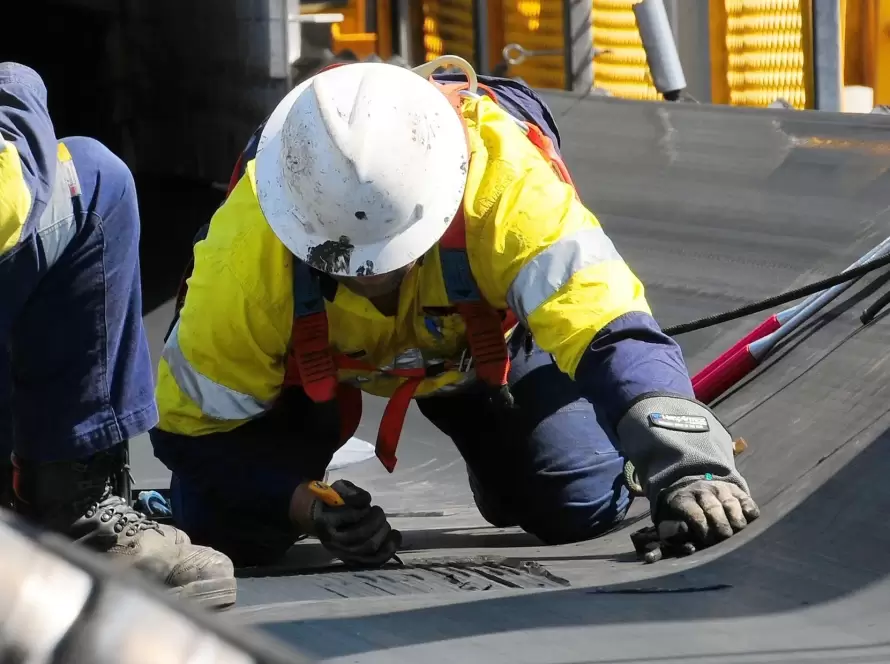
A verification of competency (VoC) is a structured assessment that confirms a worker can perform a specific task to the required safety standard. It’s practical proof that you can do the job safely right now, not just a record of what you studied years ago. In WA’s mining, construction, and resources sectors, VoC is increasingly a condition of site access and statutory compliance.
Key Takeaways
- A VoC confirms practical on-the-job competency, not just theoretical knowledge
- VoC is required across WA’s mining, construction, oil and gas, and manufacturing sectors
- QPTS VoC assessments run approximately four hours at your worksite and are recommended every 24 months (QPTS, 2026)
- Workers are commonly assessed when changing employers, returning from extended leave, or taking on new equipment
- A VoC is not a replacement for a qualification, both may be required depending on your role
What Is a Verification of Competency?
A VoC is a formal assessment that verifies a worker has the skills and knowledge to carry out a specific task safely and to industry standards. Under the WA Work Health and Safety Act 2020, persons conducting a business or undertaking (PCBUs) have a legal duty to ensure workers are competent before assigning them to high-risk tasks. VoC is how most WA employers meet that obligation and document compliance.
Unlike completing a training course, a VoC assesses what a worker can actually do, not just what they’ve been taught. An assessor observes the worker performing the task, asks questions to test understanding of hazards and controls, and reviews relevant evidence such as logbooks, licences, or prior certificates.
When Is a VoC Required in WA?
VoC is most commonly required when:
- A worker changes employers and needs to demonstrate competency on new or unfamiliar equipment
- A worker transitions into a new role or starts operating different machinery
- A site’s safe work management system or SWMS identifies competency verification as a required control measure
- An employer’s safety programme schedules periodic revalidation, typically every 24 months
Under WA’s Mines Safety and Inspection Act 1994, statutory positions must be filled by people who are demonstrably competent and fit for their duties. VoC is one of the key mechanisms used to document this.
Which Industries Rely on VoC in WA?
Industry | Common VoC Requirements |
Mining and Resources | Plant operation, conveyor systems, rigging, blasting |
Construction | Crane and hoist operation, scaffolding, elevated work platforms |
Oil and Gas | Confined space entry, gas testing, hot work |
Manufacturing | Forklift, overhead crane, process equipment |
Transport and Logistics | Heavy vehicle operation, dangerous goods handling |
VoC is not exclusive to mining. Any industry where a worker’s competency gap creates a safety or compliance risk can require it.
What Does a VoC Assessment Involve?
Most VoC assessments combine a knowledge component with a practical skills observation. At QPTS, this follows a consistent structure:
- Document review: the assessor checks your current licences, certificates, and experience records
- Knowledge assessment: a structured theory component tests your understanding of legislation, hazards, and controls
- Practical observation: You carry out the task under direct observation, following safe work procedures
- Outcome: you receive a competency record (competent) or a referral for further training (not yet competent)
Sessions typically run four hours and are conducted at your worksite, minimising operational disruption. Learn more about QPTS VoC assessment services and how our team works across WA’s resources and construction sectors.
How Is VoC Different from a Qualification?
A qualification proves you’ve completed formal training. A VoC proves you can perform the specific task safely today.
You might hold a Certificate III from years ago, but a new employer needs to know you can safely operate their specific equipment under their site’s safety management system. The VoC fills that gap without requiring you to repeat formal training.
Both can apply at the same time. A high-risk work licence (HRWL) is a formal credential issued by WorkSafe WA. It confirms you’re trained and licensed, but it doesn’t mean you’ve been signed off for a specific worksite. An HRWL gets you the licence; a VoC gets you on the tools.
If you’re also looking to formalise your experience through a nationally recognised credential, QPTS offers Recognition of Prior Learning (RPL) pathways that can convert your on-the-job experience into a formal qualification.
Frequently Asked Questions
There’s no national standard for VoC expiry. Your employer’s safety management system sets the rules. QPTS recommends VoC assessments every 24 months to address knowledge gaps and reflect changes in legislation or technology.
A VoC should be conducted by a competent person – typically a qualified assessor, licensed trainer, or senior worker with relevant credentials. For tasks covered by a high-risk work licence, the assessor should hold the relevant licence class.
Yes. QPTS conducts VoC assessments at your workplace, across WA from Perth to Kalgoorlie and Port Hedland. We work around your operational schedule to keep downtime to a minimum.
No. Recognition of Prior Learning results in a nationally recognised qualification. A VoC results in a site-level competency record. They serve different purposes and can complement each other.