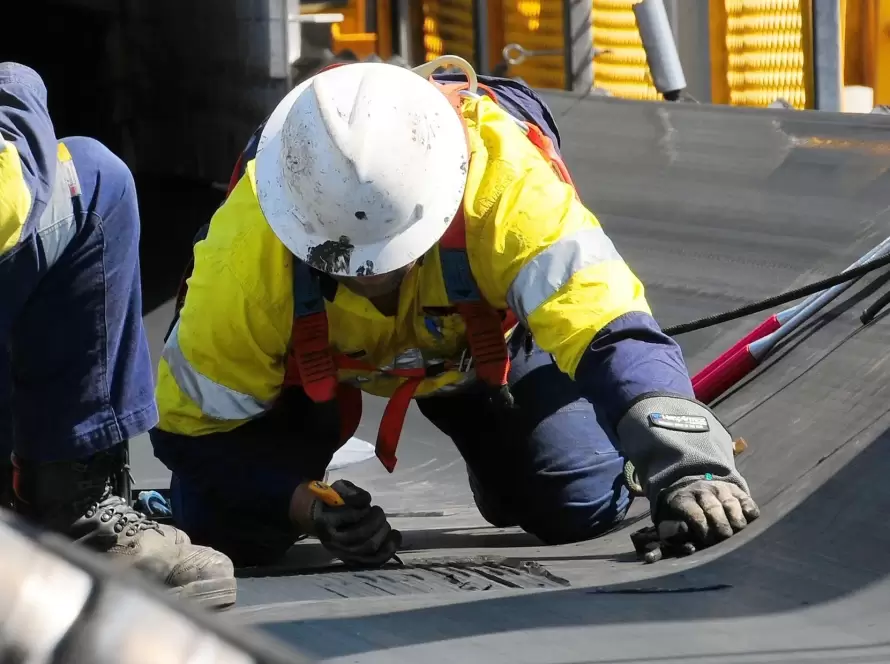
Working at heights is one of the most dangerous things you can do on a WA worksite. Falls from a height killed 24 Australian workers in 2024, and only vehicle incidents claimed more lives (Safe Work Australia).
Here’s what counts as height work in WA, what the law requires, who needs training, and how the RIIWHS204E course works.
Key Takeaways:
- Falls from a height caused 24 Australian worker deaths in 2024, 13% of all fatalities (Safe Work Australia, 2025).
- WA law sets no single trigger height: the duty applies wherever someone could fall from one level to another.
- RIIWHS204E Work Safely at Heights is the nationally recognised unit, delivered by QPTS in Welshpool from $210.
- The certificate doesn’t expire, but most WA employers require a refresher every 24 months.
What Counts as Working at Heights in WA?
Working at heights means any task where a person could fall from one level to another and be injured. WA law doesn’t set a single trigger height, though two metres is the threshold most employers use for formal training. Falls caused 13% of Australian worker deaths in 2024 (Safe Work Australia).
In practice, that covers far more than rooftops: ladders, scaffolds, elevating work platforms, mezzanines, tank tops and truck trays all count. The duty to manage the risk sits with the employer under the Work Health and Safety Act 2020, in force in WA since March 2022.
“Working at heights in WA is defined by risk, not a single number. If a person can fall from one level to another and be injured, the duty to manage that risk applies, whether the job is two metres up a ladder or twenty metres up a steel frame.”
What Does WA Law Require?
Employers must work through the hierarchy of controls before anyone leaves the ground. WorkSafe WA’s Managing the Risk of Falls at Workplaces code of practice, published in July 2022, sets out how to work from the ground where possible, prevent falls with platforms and edge protection, and treat harnesses as the last resort.
There’s also a deadline to circle. WorkSafe WA has given construction a transitional period to meet the new falls from height requirements, and it runs until 30 September 2026. If your site controls still reflect the old rules, this is the year to fix them.
“The hierarchy of controls is the legal starting point for height work in WA: eliminate the need to leave the ground first, isolate the fall risk with platforms or edge protection second, and treat harnesses and fall arrest as the last line of defence, never the first.”
Who Needs Working at Heights Training?
Anyone whose job carries a fall risk needs to be trained and competent, and most WA employers set that bar at work above two metres, across construction, mining, infrastructure and maintenance.
| Role | Typical height work |
| Roofers and ladders | Roof installation, gutter and edge work |
| Scaffolders and riggers | Erecting and dismantling work platforms |
| EWP operators | Boom lifts and scissor lifts |
| Maintenance and shutdown crews | Plant, tanks, racking and conveyors |
| Trades on multi-storey builds | Formwork, framing and facade work |
| Telecoms and utilities workers | Towers, poles and pits |
New to site work? Start with our white card guide. Dogging, rigging and other height-related plant work also needs a high-risk work licence.
What the RIIWHS204E Course Covers?
The nationally recognised unit for height safety is RIIWHS204E Work Safely at Heights. At QPTS, it runs as a half-day (4-hour) or full-day course at our Welshpool facility for $210, mixing classroom theory with practical exercises on a simulated work structure.
You’ll cover hazard assessment, fall forces, harness fitting and inspection, anchor types and rescue procedures, and receive a Statement of Attainment and wallet card on completion. Bring photo ID, wear long sleeves and closed shoes, and be ready for suspended exercises.
| Course | Duration | Price |
| Working at Heights (RIIWHS204E) | Half day (4 hrs) or full day | $210 |
| Working at Heights Refresher | Half day (4 hrs) | $175 |
| Heights + Confined Spaces Refresher Combo | One day | $350 |
How Often Do You Need a Refresher?
Your Statement of Attainment doesn’t legally expire, but the currency period most WA employers require is 24 months. Plan on a working at heights refresher every two years; QPTS refreshers require a heights ticket under three years old.
If your confined spaces ticket is due at the same time, the heights and confined spaces refresher combo renews both units in a single day. New to that work? Start with the confined spaces course instead.
Working at Heights FAQs
No. The WHS duty applies to any work where a person could fall from one level to another and be injured. Two metres is the common industry threshold for requiring formal training, but risk, not height alone, decides what controls you need.
There’s no formal expiry on the RIIWHS204E Statement of Attainment. In practice, most WA employers and principal contractors require refresher training every 24 months, and QPTS refresher courses need your existing ticket to be under three years old.
No. The unit includes practical assessment: fitting a harness, working with anchor points and completing suspended exercises. That has to happen in person, which is why QPTS delivers the course on a purpose-built structure at our Welshpool facility.
Book Working at Heights Training in Perth
QPTS (RTO #40804) runs RIIWHS204E courses at our purpose-built Welshpool facility every week. Book the Working at Heights course, or contact us to arrange group training for your crew.